

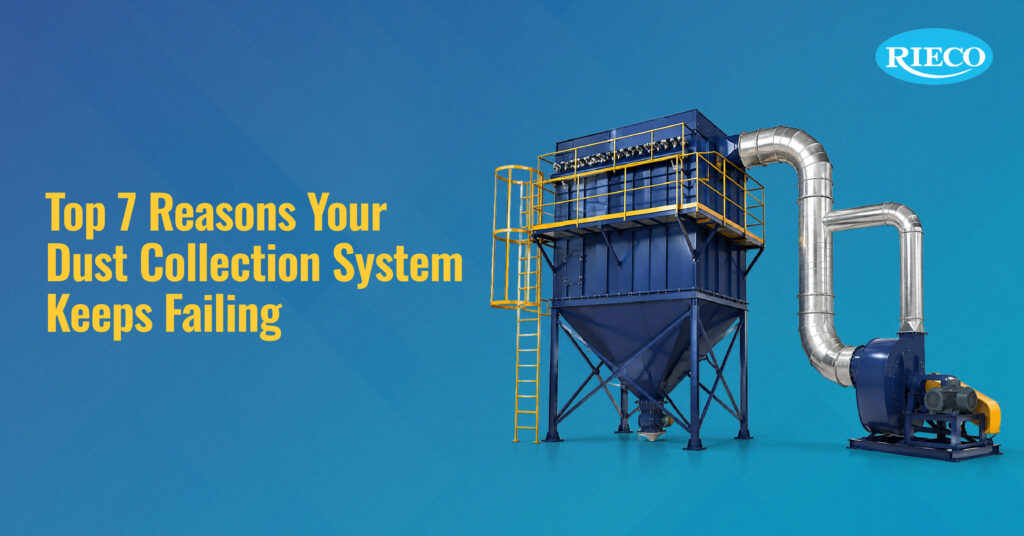
Top 7 Reasons Your Dust Collection System Keeps Failing
Air Pollution Control
A poorly functioning dust collection unit does more than leave a layer of grime on the factory floor. It reduces plant visibility, compromises product purity, and creates serious compliance risks. When a facility faces recurring dust collection system failure, the root cause is rarely a single component breaking down. Instead, systemic oversights in design, operation, and maintenance usually drive these issues in industrial dust collectors.
Understanding why these units sometimes do not perform well is the first step toward achieving reliable industrial air pollution control. This guide breaks down the seven primary reasons these systems fail and how to fix them.
1. Improper Exhaust Fan Selection and Operation
The exhaust fan is the prime mover of the entire system, responsible for overcoming the resistance of the hoods, ductwork, and filter media. A common mistake is selecting a fan based solely on air volume while ignoring static pressure requirements.
If a fan cannot generate enough static pressure, airflow drops drastically as the filters get dirty. Not only this, running a fan backward after electrical maintenance or allowing material buildup to unbalance the blades will severely reduce air filtration efficiency. Without the right fan performance, the system cannot pull dust away from production lines.
2. Neglected Filter Media and Bag Failures
Filters are the most crucial component of any extraction unit, yet they are constantly the most neglected component. Perpetual filter bag issues arise from mechanical wear, chemical attacks, or temperature extremes.
Moisture is a particularly common enemy. If hot, humid gas cools inside the collector, water condenses on the fabric. This wet dust dries into a hard crust that blocks airflow completely. Regular physical inspections are required to spot blinding, holes, or dropped bags before they cause massive dust extraction problems.
| Symptom | Potential Root Cause | Immediate Action |
|---|---|---|
| Dusty discharge from the exhaust | Torn or improperly seated filter bag | Inspect the cell plate and replace damaged media |
| Rapidly rising pressure drop | Moist air causes dust cake hardening | Check process insulation and compressed air dryness |
| Bleed-through of fine particles | Wrong fabric selection for the dust size | Upgrade to membrane or finer weave media |
3. Poor Ductwork Design and Low Velocity
Dust must stay suspended in the air while traveling from the hood to the collector. If the ductwork is too large, the air velocity drops below the minimum carrying velocity required for that specific material.
When velocity drops, heavy particles settle at the bottom of horizontal duct runs. This accumulation creates a problem: it restricts the pipe area, starves air at the collection hoods, and presents a severe fire hazard. Sharp elbows, T-junctions, and improper expansions worsen these industrial dust control failures by adding unnecessary resistance.
4. Inadequate Pulse Jet Cleaning Systems
Most modern industries rely on compressed air pulses to knock collected dust cakes off the filters. If the cleaning system cannot deliver the right pressure or volume, the filters stay dirty.
Common weak spots include faulty solenoid valves, leaking diaphragms, or plugged blowpipes. In addition to that, using wet or oily plant air for pulsing introduces contaminants directly onto the clean side of the product, ruining the filter media instantly. Effective dust collector troubleshooting always includes a thorough check of the compressed air headers and sequencing timers.
5. Hopper Overfilling and Material Storage Blunders
The pyramidal hopper at the bottom of a collector is designed to guide settled material down into a disposal valve. It is not meant to be used as a storage bin.
When dust accumulates in the hopper due to a jammed rotary valve or an offline screw conveyor, the rising pile gets swept back up into the high-velocity airstream. This causes extreme abrasive wear on the lower sections of the filters and can completely plug the inlet area.
6. Ignoring Differential Pressure Gauge Readings
A differential pressure gauge measures the resistance to airflow across the filter elements. It is the single most important diagnostic tool on the machine, yet its readings are often ignored until the system stops pulling air entirely.
A steady, normal reading shows that the cleaning cycle matches the dust loading. A sudden spike indicates blinded filters or a failed cleaning mechanism. Conversely, a sudden drop usually points to a torn filter or a disconnected duct. Tracking these numbers during routine dust collector maintenance prevents unexpected plant downtime.
7. Mismatched Equipment for the Dust Type
Not all dust behaves the same way. Light, fibrous materials like wood shavings require a different collection approach than heavy, abrasive metal dust or hygroscopic food powders.
If a generic collector is installed without analyzing material characteristics like bulk density, explosivity, and moisture content, the unit will struggle. Fine chemical dusts can pass straight through standard fabrics, while static-prone plastics will cling to steel walls and bridge across hopper openings.
A Systemic Approach to Troubleshooting
Fixing this constant dust collection system failure requires moving away from temporary patches and addressing the physical layout and operation of the entire system.
- Verify System Volume: Use a pitot tube to measure actual duct velocities at regular intervals. This ensures your exhaust fan consistently overcomes static resistance and prevents hazardous material drop-out inside the pipes.
- Audit the Cleaning Cycle: Ensure the compressed air supply maintains adequate pressure during peak pulsing frequencies to prevent thick dust cake accumulation, which drastically lowers your overall air filtration efficiency.
- Inspect the Clean Air Side: Look for telltale dust tracking inside the exhaust plenum, which confirms immediate bypass leaks or torn media.
Consistently performing these diagnostic checks protects your filter investment, keeps your workflow compliant, and prevents unexpected structural downtime across the factory floor.
At Rieco, engineering dependable industrial systems is our primary focus. We design and build robust air pollution control and clean air solutions that address these exact operational vulnerabilities from the ground up. By focusing on precise evaluations of heavy-duty construction and tailored material handling configurations, our equipment helps facilities maintain strict environmental compliance and reliable uptime without recurring operational failures.


