

Pneumatic Conveying vs Mechanical Conveying: Cost, Maintenance & Energy Comparison
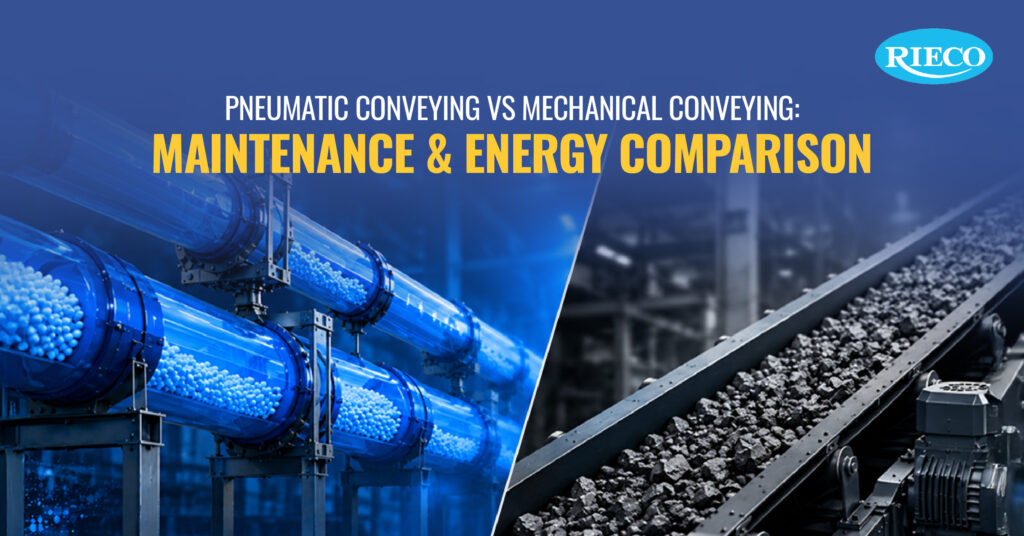
Pneumatic Conveying System
Choosing between pneumatic conveying and mechanical conveying depends on material type, plant layout, and budget. While mechanical systems offer lower power consumption, a pneumatic conveying system provides superior dust control and layout flexibility for modern industrial processing plants. This guide compares cost, maintenance, and energy efficiency.
Selecting a bulk material conveying method is a decision that dictates the long-term efficiency of a production facility. In industries like cement, food processing, or chemicals, the movement of powders and granules is the heartbeat of the operation. If the heartbeat is erratic, the entire system fails. Engineers and plant managers often find themselves weighing the pros and cons of air-based transport against physical, mechanical movement. This choice impacts everything from utility bills to how often the maintenance crew has to climb up a ladder with a grease gun.
What Is Pneumatic Conveying?
A pneumatic conveying system moves bulk solids through a completely enclosed pipeline using a pressure differential. This pressure is created by a blower, fan, or compressor. The air acts as the transport medium, carrying the particles from a pickup point to a discharge destination like a silo or a hopper.
There are two primary ways this works. The first is the lean phase, where the material is suspended in a high-velocity air stream. It is fast and works well for non-abrasive powders. The second is dense phase, where the material moves at lower speeds in slugs or plugs. This is much gentler on the product and the pipes, making it the preferred choice for abrasive materials like cement or fragile food ingredients. Because the system is entirely sealed, it is excellent for keeping the plant floor clean and preventing product loss. Pneumatic conveying is often the first choice when space is tight because pipes can turn corners or go vertical without needing extra motors.
What Is Mechanical Conveying?
A mechanical conveying system uses physical components to push, pull, or carry material along a fixed path. These systems have been the backbone of industry for decades because they are straightforward and use less power per ton of material moved. Common examples include belt conveyors, screw conveyors, bucket elevators, and drag chains.
These systems rely on a motor to drive a belt or a metal screw. They are often open to the atmosphere or only partially covered, which makes them easy to inspect but harder to keep dust-free. Mechanical systems are excellent for heavy, dense materials that might be too taxing for an air-based system to lift. However, they are limited by geometry. A belt conveyor usually moves in a straight line or a slight incline. If the material needs to go around a corner or up three floors, a plant might need three separate pieces of equipment to make that happen. This adds complexity and more points of potential failure.
Comparison Table
The following conveyor comparison table provides a quick look at how these two methods stack up against each other across key metrics.
| Feature | Pneumatic Conveying | Mechanical Conveying |
|---|---|---|
| Plant Layout | Highly flexible, pipes go anywhere | Rigid, straight lines or slight curves |
| Dust Control | Excellent (Completely enclosed) | Moderate (Requires extra dust hoods) |
| Power Use | Higher (Needs compressed air) | Lower (Direct motor drive) |
| Wear and Tear | Minimal moving parts, pipe erosion possible | High (Chains, belts, and bearings) |
| Material Types | Best for powders and small granules | Best for heavy, wet, or large materials |
| Space Needs | Small footprint | Large structural footprint |
Maintenance and Operational Differences
Maintenance is where the true cost of a conveyor comparison becomes clear. A pneumatic conveying system has very few moving parts. Aside from the blower and the discharge valves, the system is mostly stationary piping. This means the maintenance team spends less time replacing belts or greasing rollers. The primary concern here is the internal wear of the pipes if the material is abrasive. Using ceramic-lined elbows or specialized pipe geometry can mitigate this.
In contrast, mechanical systems are a collection of moving parts. Chains stretch, belts slip, and bearings seize. Because these parts are in constant motion, they require a strict lubrication schedule and frequent inspections. If a belt snaps, the entire line stops. However, when a mechanical system does fail, the problem is usually visible and easy to diagnose. A leak in a pneumatic pipe might be harder to find without the right sensors.
Operational energy is another major divide. Moving air is less efficient than moving a belt. A pneumatic conveying system will almost always have a higher electricity bill than a mechanical one for the same amount of material. However, the trade-off is often worth it for plants that prioritize hygiene or have complex layouts where multiple mechanical conveyors would be too expensive to install and maintain.
Choosing Based on Material and Plant Needs
The choice is not always about which system is better, but which one fits the material and the environment. For instance, finished cement is a fine, thirsty powder. If moved on an open belt, it creates a massive amount of dust that is both a health hazard and a loss of profit. In this case, pneumatic conveying is the clear winner because it keeps the product contained.
Layout is the second big factor. If a plant is being retrofitted into an existing building, there might not be room for a long, straight conveyor belt. A pneumatic pipe can be routed around pillars, through ceilings, and across rooftops with minimal structural changes. This flexibility is often the deciding factor in modern urban facilities where floor space is at a premium.
For heavy, lumpy materials like coal or large aggregates, mechanical systems remain the standard. The energy required to blow a large rock through a pipe is simply too high to be practical. However, for food processing, where sanitation is a priority, the enclosed nature of air-based transport prevents contamination from insects or moisture.
Conclusion
Understanding the nuances of pneumatic conveying vs. mechanical conveying is essential for building a facility that lasts. While mechanical options save on energy, they often cost more in floor space and manual labor over time. Pneumatic systems offer a level of cleanliness and flexibility that is hard to match in modern processing environments.
At Rieco, we recognize that a conveyor is never just a standalone machine. It is one part of a much larger, integrated process. Whether you are handling delicate food ingredients or abrasive industrial powders, the goal is to create a holistic system where every piece of equipment works in harmony. We focus on delivering complete, end-to-end plant solutions. This means we do not just sell a mill or a single pipe. We design fully integrated systems that manage everything from the initial material intake to the final processing stage. By looking at the total plant requirement, we ensure that your choice of bulk material conveying methods supports the productivity and safety of your entire operation.


