

Common Pneumatic Conveying Problems & How to Fix Them
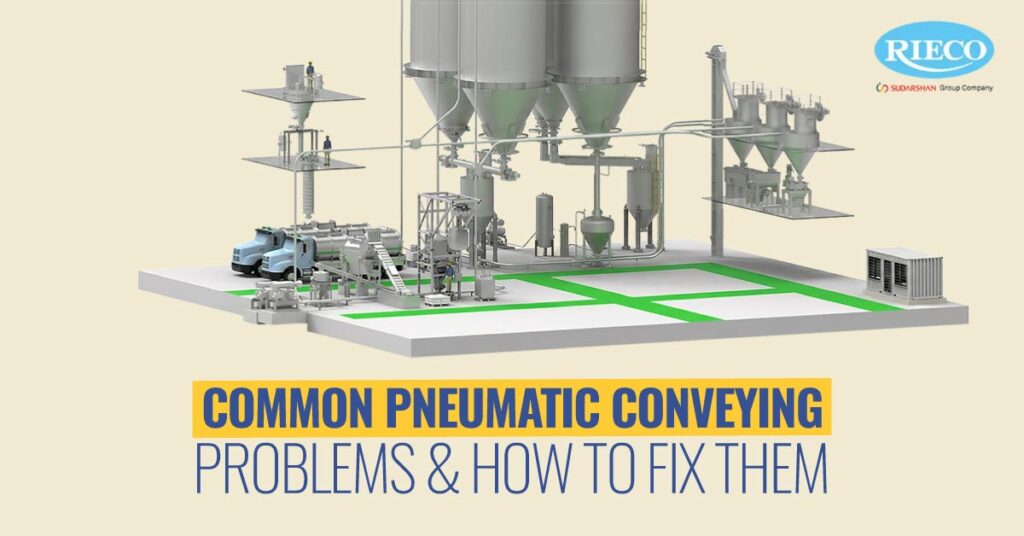
Pneumatic Conveying System
Pneumatic conveying systems are widely used across industries such as cement, chemicals, food processing, power, and minerals for moving powders and bulk solids in a clean, enclosed manner. While these systems offer flexibility and hygiene advantages, they are also sensitive to design, operation, and material behaviour. Many plants encounter recurring performance issues that impact uptime, maintenance costs, and product quality.
Understanding common pneumatic conveying problems and addressing them with the right engineering approach is essential for maintaining reliable and efficient material transfer.
What Is Pneumatic Conveying?
Pneumatic conveying is a material handling method that transports powders, granules, or bulk solids through pipelines using air or gas as the conveying medium. Depending on material characteristics and process requirements, systems are typically designed as:
- Dilute phase conveying which uses high air velocity and lower material loading
- Dense phase conveying, which uses a lower velocity and higher material loading for fragile or abrasive materials
A typical system consists of a blower or compressor, a feeding device, a conveying pipeline, bends, receivers, and filtration units. While the concept is straightforward, the interaction between air, material, and pipeline geometry makes system behaviour complex.
Most Common Issues (Blockages, Wear, Leakage)
Despite careful design, plants frequently face recurring operational challenges in pneumatic conveying systems.
Blockages and Line Choking
Material accumulation in pipelines is one of the most disruptive problems. Blockages often lead to sudden shutdowns, pressure spikes, and unplanned maintenance.
Excessive Wear and Component Failure
High-velocity conveying or poorly designed bends can cause rapid erosion of pipelines, elbows, and valves, especially when handling abrasive materials like fly ash, cement, or minerals.
Air and Material Leakage
Leaks at flanges, rotary valves, or inspection points reduce conveying efficiency and can cause dust escape, housekeeping issues, and safety risks.
Inconsistent Conveying Rates
Fluctuating feed rates or unstable air flow result in uneven material delivery, affecting downstream processes such as mixing, batching, or packing.
Causes & Corrective Actions
Each of these common pneumatic conveying problems can usually be traced back to specific design or operational causes.
Blockages
- Typical causes:
- Conveying velocity below the minimum pickup or saltation velocity
- Moisture ingress is causing material to cake
- Poorly designed pipeline bends or excessive route complexity
- Corrective actions:
- Re-evaluate the air-to-material ratio and conveying velocity
- Switch to dense phase conveying for cohesive or abrasive materials
- Use long-radius or wear-resistant bends
- Improve material conditioning and moisture control
Excessive Wear
- Typical causes:
- High air velocity in dilute phase systems
- Sharp elbows and sudden directional changes
- Inappropriate material of construction
Corrective actions:
- Reduce conveying velocity where possible
- Use ceramic-lined or hardened bends in high-wear zones
- Optimise routing to minimise directional changes
Leakage
Typical causes:
- Worn rotary airlock seals
- Improper flange alignment or gasket selection
- Pressure fluctuations stress joints
Corrective actions:
- Use correctly rated airlocks and seals
- Improve installation quality and alignment
- Monitor pressure stability across the system
Unstable Conveying
Typical causes:
- Poor feeder design or inconsistent feeding
- Air supply fluctuations
- Inadequate control instrumentation
Corrective actions:
- Select feeders suited to material flow characteristics
- Add pressure and flow monitoring points
- Implement PLC-based control for consistent operation
Best Practice Guidelines
To minimise issues and improve long-term reliability, plants should follow proven best practices when designing and operating pneumatic conveying systems.
- Understand material behaviour
Particle size, bulk density, abrasiveness, moisture sensitivity, and friability must be evaluated before system selection. - Choose the right conveying mode
Dense phase is better suited for abrasive or fragile materials, while dilute phase works for free-flowing, non-abrasive powders. - Design for maintainability
Include access points, inspection ports, and replaceable wear components in high-stress areas. - Control velocity and pressure
Operating within a stable velocity window reduces both blockages and wear. - Use proper filtration and dust collection
Well-sized receiver filters prevent pressure buildup and maintain system balance.
Plan for future capacity changes
Oversizing critical components slightly can allow flexibility without compromising performance.
Conclusion
Pneumatic conveying systems are highly effective when engineered and operated correctly, but they are also unforgiving of poor design choices or unstable operating conditions. Most common pneumatic conveying problems, such as blockages, wear, and leakage, stem from mismatches between material behaviour, conveying velocity, and system layout.
By understanding the root causes and applying corrective engineering measures early, plants can significantly improve uptime, reduce maintenance costs, and ensure consistent material flow. A well-designed pneumatic conveying system is not just about moving material. it is about doing so reliably, safely, and efficiently over the long term.


