

How Hygienic Powder Handling Systems Help Reduce Contamination Risk
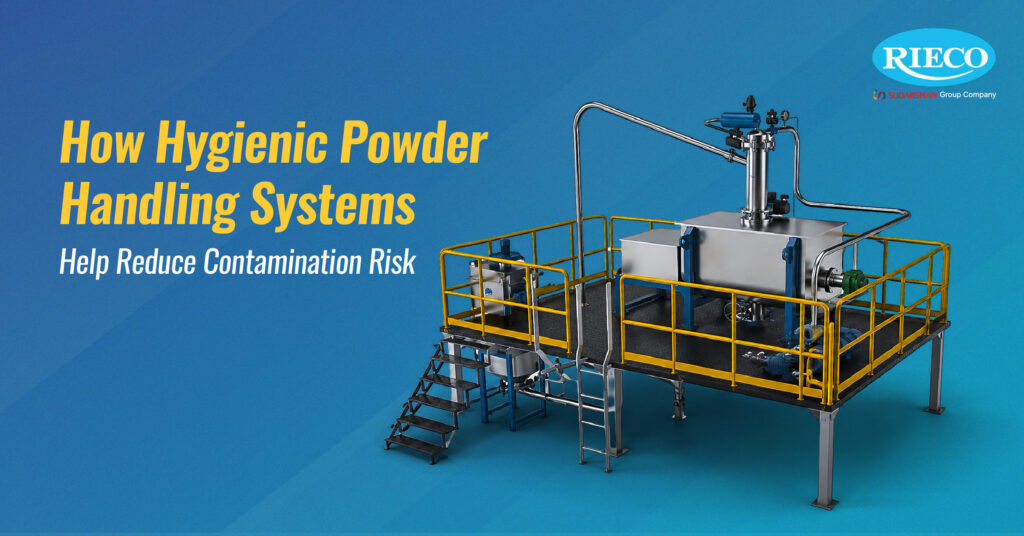
Powder Conveying System
Walk into any food or pharmaceutical plant and you will notice something quickly. The product may be high value, tightly controlled, and scientifically developed, but the way it moves between processes often determines whether that quality is preserved or compromised.
Powders are not passive materials. They disperse, settle, absorb moisture, and react to even small environmental changes. This makes handling far more important than most processes around them. The real risk lies not in processing, but in movement.
This is when hygienic powder-handling techniques become a concern. They are made to control exposure, not just transport material.
Contamination is a Process Problem, Not a Single Event
In many cases, contamination is traced back to a moment. A spill, an open transfer, or a cleaning lapse. But in reality, it is usually the outcome of repeated exposure across multiple stages. Each time powder is transferred, dropped, or manually handled, the system opens itself to:
- Airborne particles
- Residual build-up from previous batches
- Moisture variation
- External contact
This accumulation of small risks defines contamination risk in powder handling, and it cannot be solved with isolated fixes.
Controlling the Environment Instead of Reacting to It
Traditional setups often rely on external controls like room cleanliness or operator discipline. While important, they are not enough.
Modern systems take a different approach. They create a controlled pathway where the material remains isolated throughout movement. A closed powder handling system does not depend on surroundings being perfect. It reduces dependency on them.
This move changes the conversation from prevention after exposure to prevention by design.
Why Airborne Dust is More Critical Than It Looks
Dust is often treated as a housekeeping concern, but its impact runs deeper. Once powder becomes airborne, it moves freely across the plant, settling on surfaces, mixing zones, and even finished products.
A dust-free powder handling approach addresses this at the source. By controlling dust during transfer, it prevents:
- Cross-contamination between batches
- Product loss and inconsistency
- Build-up on equipment surfaces
This improves both product quality and overall plant hygiene.
Design Simplicity is a Hidden Advantage
Complex systems often create hidden risks. Sharp corners, inaccessible joints, and layered assemblies make cleaning difficult and allow residues to accumulate.
Hygienic systems focus on simplicity. Smooth surfaces, accessible layouts, and minimal dead zones make cleaning effective and repeatable.
In food and pharma powder handling, this is not just about convenience. It directly affects compliance and product safety.
Flow Consistency as a Hygiene Factor
Hygiene is not only about surfaces and air. It is also about movement.
When powders flow unevenly, they tend to accumulate in certain areas. These pockets become long-term contamination points, especially in continuous operations.
A stable powder handling system maintains a predictable flow path. This reduces stagnation and keeps material moving in a controlled manner.
Reducing Variability from Human Interaction
Manual handling introduces variability. Even with trained operators, consistency is difficult to maintain across shifts and batches.
Automated systems reduce this variability. They standardize how material is transferred, fed, and discharged. This is essential for achieving contamination-free powder handling in regulated environments.
Automation also improves traceability, which is increasingly important in both food and pharmaceutical sectors.
Different Stakes, Same Requirement
The consequences of contamination vary across industries, but the need for control remains the same. In food processing, contamination affects taste, shelf life, and consumer trust. In pharmaceutical manufacturing, it can impact safety, efficacy, and regulatory approval.
Whether it is food or pharma powder handling, the solution lies in controlling exposure throughout the process.
How Rieco Industries Limited Approaches This Challenge
In powder handling, maintaining hygiene without slowing down production requires careful system design.
Rieco’s solutions focus on creating enclosed transfer environments where material remains protected from external exposure. Instead of treating dust control and material movement as separate challenges, both are addressed within the same system design.
The Rieco Pneumatic Conveying System is one such approach, enabling sealed and controlled transfer that supports both process efficiency and cleanliness.
Where Most Systems Still Fall Short
Even modern plants encounter issues when certain basics are overlooked. Open transfer points, poorly integrated dust systems, and difficult-to-clean equipment surfaces continue to create vulnerabilities. These are not always visible during installation but become evident during operation.
Fixing them later often requires significant modification, making early design decisions far more important.
Closing line
Reducing contamination in powder processing is less about adding controls and more about removing exposure points.
Hygienic powder handling systems achieve this by changing how materials move through the plant. By enclosing transfer, stabilizing flow, and simplifying cleaning, they create an environment where contamination has fewer opportunities to occur.
As expectations around quality and compliance continue to rise, this approach is becoming the standard rather than the exception.


