

Combustible Dust Explosion in India: Standards and Explosion Protection for Powder Handling Plants
Blog
Fine powder can look harmless, but it can create a serious fire risk. When combustible dust mixes with air, one spark can trigger an explosion. This risk is present across pharma, food, chemical, and other powder-handling plants.
A combustible dust explosion in India can damage equipment, stop production and put workers at risk. Proper dust control, hazard checks and explosion protection can help prevent such incidents.
This blog explains the key risks, relevant safety standards, and protection systems used in powder-handling plants. It also covers how businesses can select the right safeguards for their processes.
What Causes a Dust Explosion?
A combustible dust explosion in India can occur when fine dust mixes with air and meets an ignition source. Materials such as powders, starch, sugar, pharma products, chemicals, and some metal dusts can create this risk.
Three things are needed for an explosion:
- Combustible dust
- Oxygen
- An ignition source
Dust can collect inside equipment, ducts, filters and storage areas. A small spark can then ignite the dust cloud. The first blast may also disturb settled dust nearby. This can lead to a second and larger explosion.
Common ignition sources include static charge, hot surfaces, friction, sparks, and overheated bearings.
Why Powder Handling Plants Face Higher Risk
Powder handling often involves grinding, conveying, mixing, and dust collection. These processes can create fine particles and static charges.
A dust explosion risk pharma plant in India faces can be higher when dry API powders or other fine materials are handled in closed equipment. Pharma plants also need strict hygiene and contamination control.
Pneumatic conveying can reduce manual handling and keep powders inside a closed system. However, the system still needs proper hazard checks. RIECO designs pneumatic conveying systems for hazardous powders and applications that require safe material transfer.
The first step is to understand the material. Dust testing can help identify its explosion behaviour. Parameters such as Kst and Pmax can then guide the design of explosion protection systems.
Key Safety Standards for Indian Plants
Plant owners should identify the rules that apply to their process, material and location. PESO standards for powder handling requirements may become relevant where petroleum, compressed gases, or other regulated hazardous substances fall within PESO’s scope.
The same approach applies to OISD combustible dust concerns. OISD publishes standards covering areas such as hazardous chemicals, fire protection, static electricity, and hydrocarbon facilities. Not every OISD standard applies to every powder plant.
For export projects or equipment intended for explosive atmospheres, ATEX-certified equipment India buyers may also consider ATEX compliance. The ATEX Directive covers equipment and protective systems designed for potentially explosive atmospheres, including those involving dust.
ATEX requirements also address ignition prevention, surface temperature, and protection against air-dust mixtures.
Therefore, certification should match the actual application. A certificate alone does not replace a proper hazard assessment.
Explosion Protection Systems for Powder Handling
An explosion protection system that Indian plants use should address both ignition and explosion spread. There are several ways to protect powder-handling equipment.
Explosion suppression
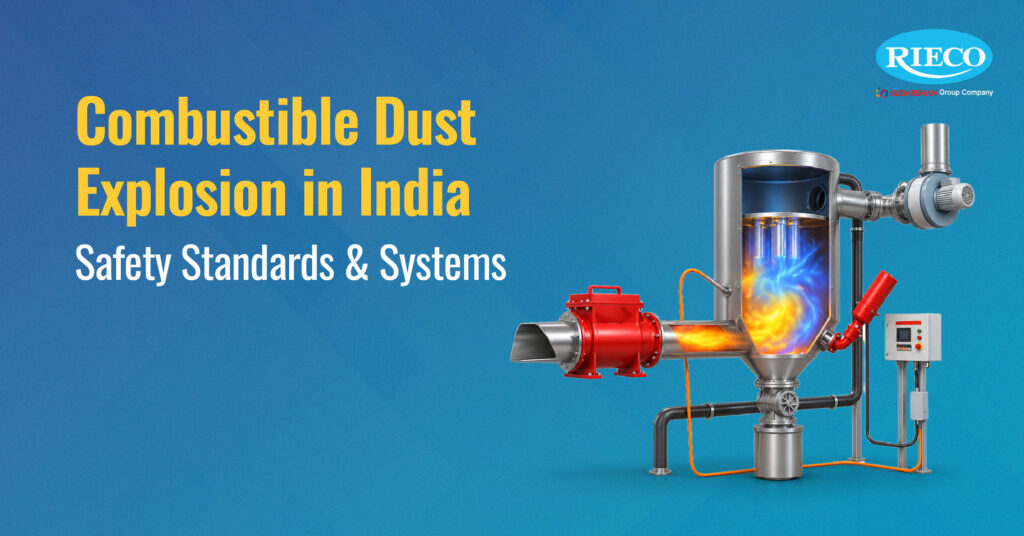
Explosion suppression systems detect the early stage of an explosion. They then release a suppressing agent within milliseconds. This can limit pressure and reduce damage to equipment and people. RIECO offers high-rate discharge systems for flammable dust applications.
Explosion venting
Explosion vents provide a controlled path for pressure to escape. Rupture discs and vent panels are designed to open at set pressures.
Correct vent sizing depends on the equipment and dust properties. It should never be treated as a standard, one-size solution.
Explosion isolation
An explosion can travel through connected ducts and equipment. Isolation devices help stop flame and pressure from moving to other parts of the plant.
RIECO offers mechanical isolation systems such as B-FLAP for this purpose.
Spark arrestors
A spark arrestor industrial system can help stop sparks from reaching downstream equipment. RIECO’s spark arrestors use internal vanes to separate sparks and heavier particles from the gas stream. They can also reduce the dust load reaching a primary dust collector.
Choosing the Right Protection Equipment
Plant operators should assess the full material-handling system before selecting equipment.
This includes grinders, conveyors, filters, silos, ducts, rotary valves and other connected equipment.
An explosion proof conveying system may also be required for processes involving hazardous or combustible materials. The right design depends on dust properties, operating conditions and the plant’s hazardous area classification.
For some processes, inert gas conveying can offer another layer of protection. RIECO has implemented closed-loop pneumatic conveying using nitrogen for explosive and flammable materials. The system reduces oxygen in the conveying environment and limits explosion risk.
Where a plant uses regulated equipment, buyers should also verify whether PESO certified explosion protection is required for the particular installation. Compliance should be checked against the current rules and the actual plant application.
Conclusion
At RIECO, we believe explosion protection should start with understanding the process, not simply selecting a safety device. Our approach combines powder testing, process knowledge and engineered protection. Our solutions cover pneumatic conveying, dust extraction, spark arrestors and explosion protection systems.
We work with plants handling pharma powders, chemicals, food products, minerals and other bulk materials. Our explosion protection solutions include suppression, venting, isolation and protection for bulk material transport. For us, safer powder handling means looking at the complete system. The material, equipment, conveying method and possible ignition sources all matter.
With the right assessment and engineered safeguards, plants can reduce explosion risk while maintaining reliable material handling. RIECO helps industries design powder-handling and explosion-protection solutions around their actual process needs.


