

Enhancing Efficiency in Dolomite/CaCO3 Conveying for Paint Manufacturers
Industry:
Paint
Location:
Andhra Pradesh,India
Problem Statement –
- The customer faced significant operational issues with their Dolomite/Calcium Carbonate pneumatic conveying system, resulting in decreased production efficiency and a dusty work environment.
Challenges

- The 60 HP motor consistently took on excessive load, leading to frequent tripping.
- The line choked monthly, causing material to settle and block the system.
- Material leakage occurred at flanges.
- Rotary Airlock Valve tripped above 30% load.
- Irregular hopper geometry resulted in poor flowability, leading to material bridging and rat-hole formation.
- Butterfly Valves in the conveying line malfunctioned.
- Material entered the airline due to back pressure from the Y-piece before the loading tee and lack of an isolation valve.
- The system achieved a conveying capacity of less than 20 TPH, falling short of the required 30 TPH.
Data Collected & Data Analysis
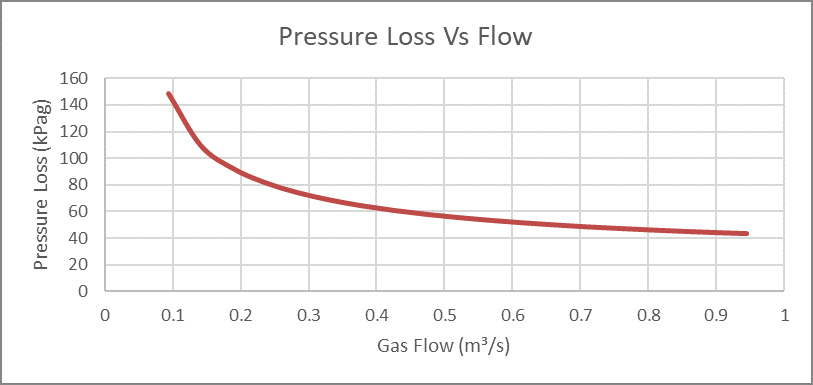
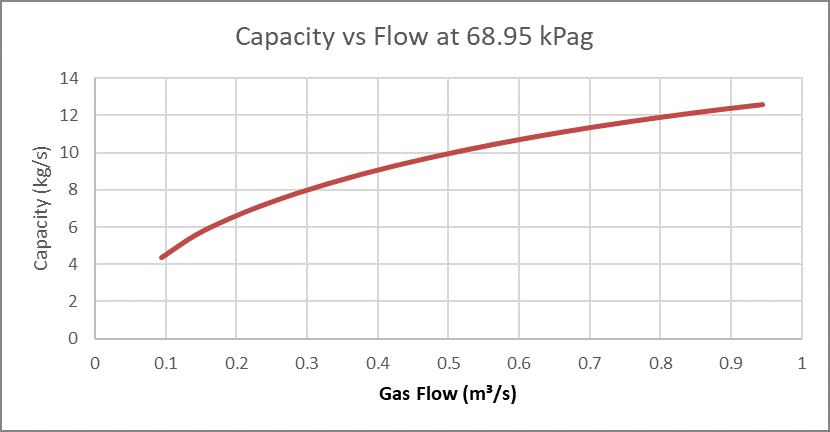
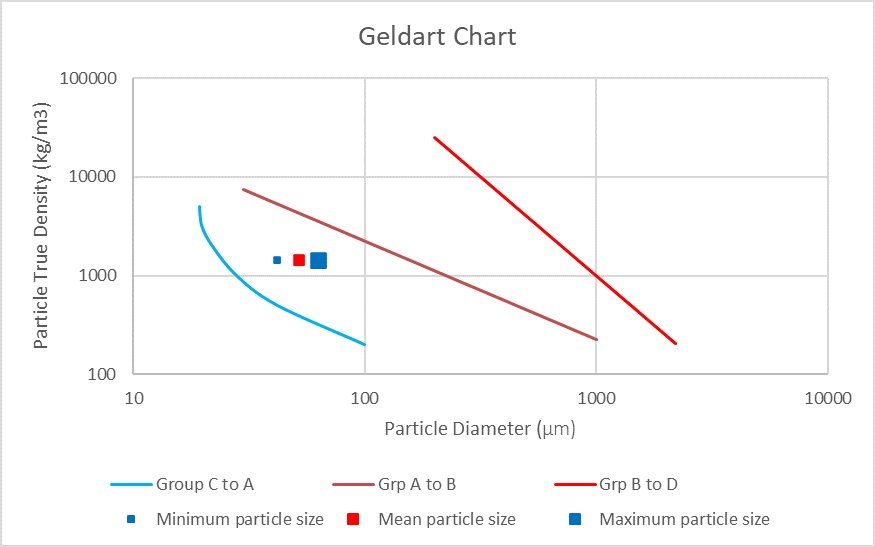
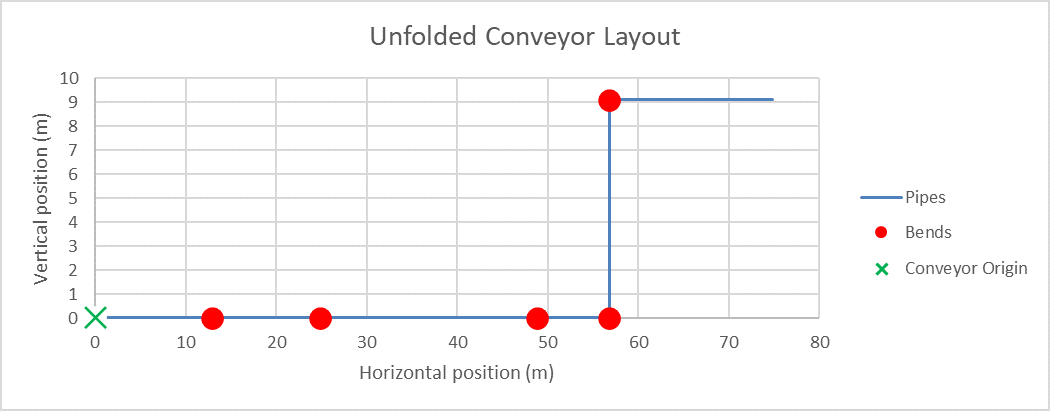
Based on the data collected during our site visit, we did the data analysis & following results were obtained-
| Description | Units |
|---|---|
| Site conditions | |
| Elevation above sea level | 100.00 m |
| Minimum Temperature | 16.00 °C |
| Maximum Temperature | 45.00 °C |
| Materials | |
| Name | Dolomite/CaCO3 |
| True Density | 1450 kg/m3 |
| Mean Particle Size | 52 µm |
| Temperature | 45.00 °C |
| Material Calibrating Factor | 1.00 |
| Gas | |
| Name | Air |
| Temperature | 70.00 °F |
| Calculations | |
| Capacity | 8.33 kg/s |
| Gas Flow Rate | 0.85 m3/s |
| Temperature Gradient | 0.00 °C/100m |
| Equilibrium Temperature | 45.55 °C |
| Pick-Up Velocity | 18.33 m/s |
| Terminal Velocity | 26.45 m/s |
| Discharge Pressure | 0.00 kPag |
| Conveying Design Pressure | 45.22 kPag |
| Material to Gas Ratio | 8.16 to 1 |
| Saltation velocity | |
| Selected Saltation Velocity | 10.33 m/s |
| Max Velocity for Dense Mode | 8.26 m/s |
| Min Velocity for Dilute Mode | 12.40 m/s |
Root Cause Analysis
Our team conducted a detailed investigation to pinpoint the issues hampering the performance of the customer's pneumatic conveying system. Here's what we uncovered -
| Sr. No. | Problem | Root Cause Analysis |
|---|---|---|
| 1. | Roots Blower Motor Tripping | The existing blower lacked sufficient pressure and motor power to handle the required material conveying capacity. |
| 2. | Recurring Line Choking |
1. Insufficient air pressure and volume caused material to settle, making it difficult to stay in suspension. 2. The RAV connection lacked a leakproof seal, allowing air leakage and reducing effective air supply. 3. Short-radius bends and elbows in the line caused pressure drops and powder accumulation at bends. 4. The Y-piece near the blower further reduced air pressure, worsening the flow issues. |
| 3. | Material Leakage at Flanges | Substandard gaskets caused flange leaks and material loss. |
| 4. | Rotary Airlock Valve tripping above 30% Load | Frequent line choking at the loading tee caused material buildup, overburdening the RAV and triggering shutdowns. |
| 5. | Poor Flowability in Charge Hoppers | Moisture in the conveying air caused powder caking, while the hopper's irregular design aggravated material bridging and flow blockages. |
| 6. | Butterfly Valve Failures | The valves were prone to leakage by design, causing powder to escape and rendering them ineffective over time. |
| 7. | Material Entering the Airline | Back pressure from line blockages, combined with the absence of an isolation valve after the NRV, pushed material into the airline. |
| 8. | Underperformance of Conveying Capacity | A combination of insufficient air, frequent line blockages, leaks, and poor material flow reduced capacity to under 20 TPH instead of the required 30 TPH. |
Solution
Below modifications were suggested by us to mitigate the problems- -
| Problem Statement | Recommendations |
|---|---|
| Roots Blower motor tripping frequently |
Roots Blower specifications should be as below: 1. Capacity: 3061 m3/Hr. 2. Pressure: 0.7 Bar 3. Motor: 120 HP (VFD suitable) |
| Conveying line choking & RAV tripping above 30% load |
1. Knife Gate Valves should be installed above (BFV) & below RAV to ensure leak-free operation. 2. The elbows/short radius bends used in the line should be replaced by long radius bends (min. 5D bends) to reduce the pressure drop & powder accumulation. |
| Material leakage at flanges | Replace gaskets with Black Neoprene Rubber for leak prevention. |
| Poor material flowability in Charge Hoppers | Install Pneumatic Vibrators to improve material flow and prevent bridging. |
| Malfunctioning Butterfly Valves | Replace Butterfly Valves with Knife Gate/Dome Valves for better sealing and performance. |
| Material entering the airline due to back pressure | Install a Butterfly Valve after the NRV to replace the ‘Y’ piece and stop material from entering the airline. |
How we made a difference
- We provided tailored solutions including equipment upgrades, installation instructions, and RIECO-make Knife gate valves, gaskets, and bends.
- Reduced material leakage, leading to a dust free work environment.
- Increased production efficiency and reduced downtime.
- This resulted in a conveying capacity improvement to 30 TPH.
Results: The system now operates efficiently, consistently achieving the required conveying rate without issues.